Tag Archives: minimalism

Ownership and Possession

The world economy would collapse if a significant number of people were to realize and then act on the realization that it is possible to enjoy many if not most of the things that they enjoy without first having to own them.

 Mokokoma Mokhonoana

It’s been a while since the last post on this site, mainly because I have been fighting to get the Spanish authorities to issue a license which will allow me to ride a motorcycle. With the help of my local Town Hall and Deputy Mayor (a fellow biker) it now seems that I’m nearly there and I should be able to collect my bike in a week or so.

In some ways, I can’t wait – it has been over five years since I last rode a motorcycle and I am looking forward to it so much that I could burst. On the other hand, I’m also nervous for the same reason – five years is plenty of time to forget how to ride safely and motorcycling is one of those skills that’s best kept current. Fortunately, most of the roads round where I live are pretty quiet, so I will have a chance to build up my skills again without too much traffic.

Anyway, during the last few weeks of owning a bike but being able to ride it, I did begin to ruminate about things like ownership and possession and how they are not only importantly different, they may also get to the very heart of this whole minimalism thing.

I own a motorcycle. But, what does that really mean? It’s not here in my house, I can’t touch it or see it and if I even want to sit on it, I will have to drive for almost an hour. Really, the notion of ‘ownership’ is simply a convention by which most members of a society recognize that a certain person or group has a right to control a thing or place, even if they don’t physically possess it.

When you stop to think about it, that’s actually an odd idea. At the most basic level, we can really only possess the things that we directly control. But the notion of ownership means that it’s fine to have possessions that we virtually never see or, for example, to own property we only visit twice a year.

Monkey

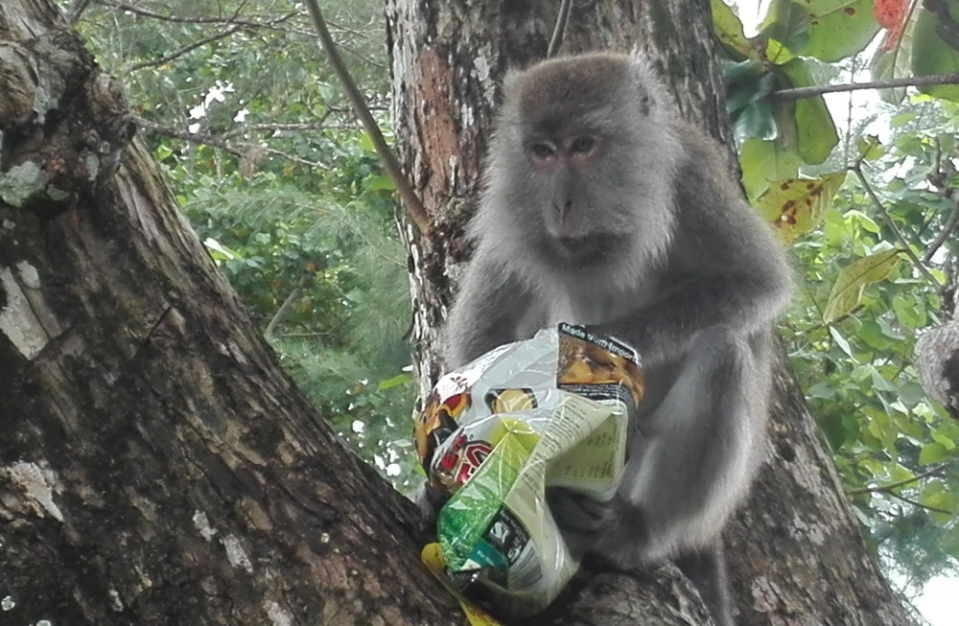
I met this guy while trekking in the rain forest in Borneo. He took a very simple view of the whole ownership/possession thing and relieved me of part of my lunch when I temporarily stepped away from it. I may have owned those crisps, but he ate them!

Accepting without question the notion of ownership is essential to maintaining the consumer society. You can own as many things as possible and it is good to replace things not because they are worn-out or broken but because you want to replace them with something even more shiny.

Perhaps we need to return to thinking not about ownership but about possession? Having in our control only those things we need to live our lives in the way that we choose. That’s why I like the quote with which I opened this post – it’s by South African writer and philosopher Mokokoma Mokhonoana from his book The Use and Misuse of Children and I think it neatly encapsulates a lot of what I believe.

In the modern world, we have to believe that ownership equates to happiness and that the more things we own, the happier we’ll be. Endemic dissatisfaction, unhappiness and depression suggest that this is a fallacy. Perhaps it’s time to think about what we really need rather than what we are told we should need and to spend time instead enjoying the things that don’t require ownership like  the sun on a snow-covered mountain or the smile on the face of a happy dog.

Getting closer…

I finally seem to be closing in on a bike – hurrah!

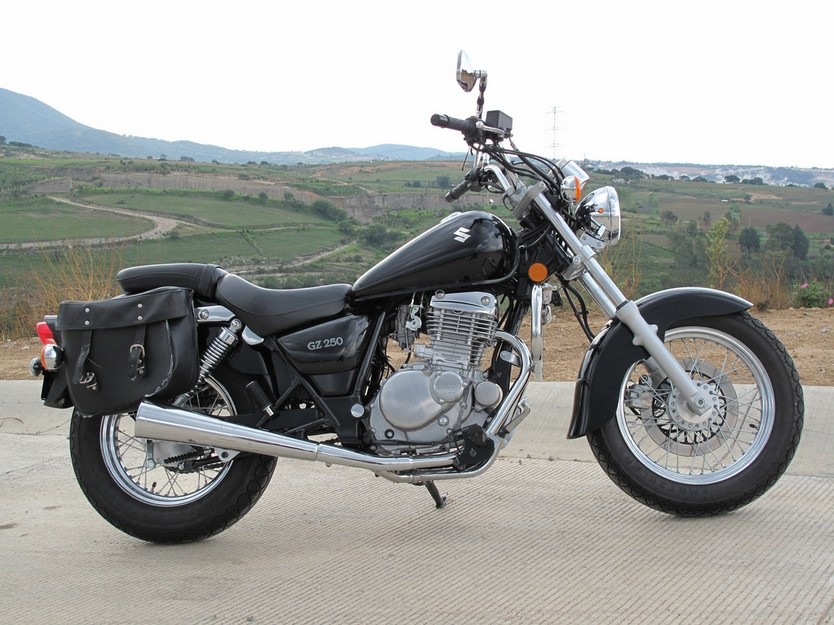
I have found a fifteen year old Suzuki Marauder 250 being sold by a motorcycle shop in the city of Granada, about fifty kilometres from where I live. Buying a motorcycle (actually, doing just about anything…) is more complicated here in Spain and my low level of Spanish doesn’t help. However, I think I’m sorted and I hope to collect it next week.

I have been to take a look at the bike and it doesn’t look too bad given its age and the fact that it has done 40,000 kilometers. It has a few lumps and bumps and someone has tried to cover up corrosion by over-spraying it with silver paint, but otherwise it seems reasonable, the tyres are good and it has no obvious leaks or other issues. Most importantly, it feels great – not as small as I expected and really quite solid. The seat seems very comfortable and the footrests are well forward for rider and passenger, leading to less stress on our elderly knees.

For those who aren’t aware of it, the Marauder GZ 250 was launched in 1998 and it has a 249cc, SOHC, single-cylinder, two-valve, air-cooled engine which produces just 20 horsepower. The engine is taken from the GN 250 which was first built in 1981 and it uses a single carburettor and chain final drive and is mounted in a cruiser type, twin-shock frame with a single disc brake at the front and a drum at the rear. All pretty basic engineering then, but that’s just what I wanted. The engine has a good reputation for reliability, it’s said to be capable of around 75mph and, more importantly, 80mpg, but we’ll see if it can really do either of those things with two people on board.

SUZUKI-GZ250-Marauder-6172_1

Not the actual Marauder I have been looking at, but virtually identical other than for a back-rest.

It also seems comfortable for Julie on the back – an important issue because she’ll be there for most of the long journeys. I did buy a bike many years ago, a Laverda 750S, which was great with one person on it, but basically useless with two – I won’t be making that mistake again! The Suzuki also comes with saddlebags and a backrest, the two accessories I wanted for touring.

The total price is €800 which includes the cost of using a lawyer to draw up a contract for the sale which comes to €130-150. So, the bike is actually costing around €650, not a lot of money and well within our budget. Buying a motorcycle in the winter here in Spain, as in most places, means that prices are good especially from motorcycle shops which are struggling to maintain cash-flow. It should also mean that if we do decide to sell it later, we should be able to get our money back.

Now that I may be close to actually getting a bike, I’m feeling very nervous indeed. I haven’t ridden anything bigger than a scooter since 2013 for one thing. For another, I’m wondering if the whole notion of touring on a 250 is just silly? Well, there is only one way to find out…

Motorcycles and Magical Thinking

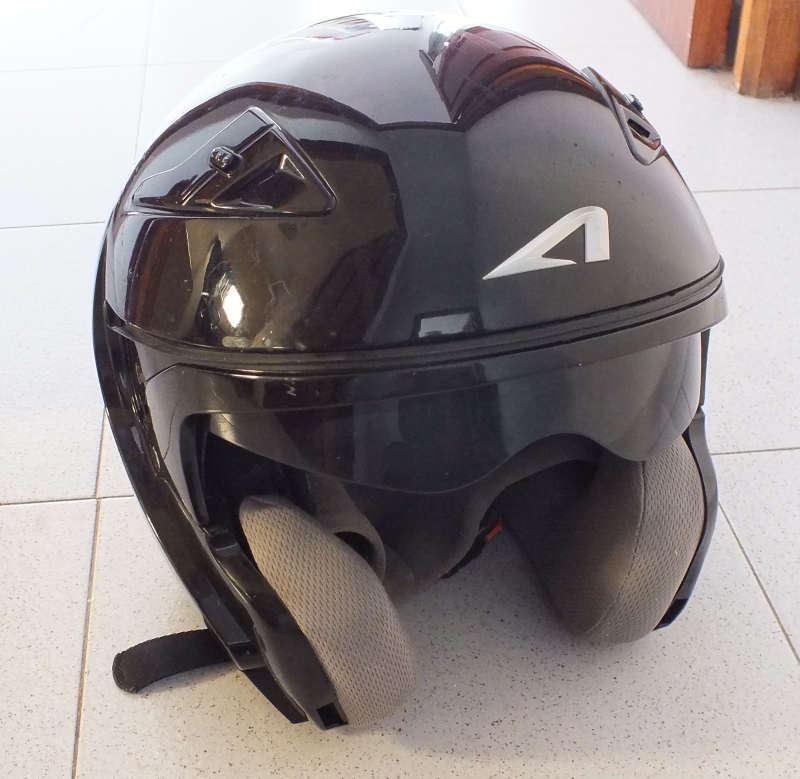
I bought a motorcycle helmet recently. It cost €5 and I got it at a car boot sale. I can almost hear the disapproving sucking in of breath from you, dear readers, but is buying a used bike helmet really a safety issue? Should I be spending more money on this item of bike gear?
helmet1

My €5 Helmet. I removed the lining to wash it and checked the internal and external shells and it’s in pretty good shape. Fits well, too…

Wearing a helmet on a motorcycle is clearly a good idea. Even leaving aside what happens if you fall off, getting hit by road debris or even large insects is a problem – you don’t have to be going very fast for a bee up the nose to spoil your whole day. But, like many motorcyclists, I have in the past felt the need not just to have a helmet, but to have the latest and very best helmet I could afford.

Bell, Shoei, Akai – Over the last forty-odd years (I started riding motorcycles in 1977) I have owned some of the nicest and most expensive motorcycle helmets around. However, now that I’m older and wiser (OK, let’s settle for ‘older and a little less stupid’) and interested in the whole more for less thing, I wonder whether I really need to spend a lot of cash on the very latest race-rep lid?

Statistics (and is there anything more confusing that statistics?) show that the speed of the average motorcycle accident is around 20 – 21mph. That hasn’t changed for a number of years and I would suggest that it doesn’t actually make a great deal of difference if you’re wearing an $800 Shoei X-Fourteen or a forty dollar, no-name helmet; both are going to give adequate protection at that speed. There is very strong evidence that wearing a helmet is much safer than not wearing a helmet. There is no statistical evidence at all that an expensive helmet is better than a cheap helmet.

So, how come so many of us believe that the more money we spend, the safer we’ll be? First of all, that’s what a whole industry tells us. The people who sell motorcycle helmets have to persuade us that, if we’re to be really, really safe, we need not just one of their helmets but the very latest one. The motorcycle press, who rely on advertising from people like helmet manufacturers, have to say the same thing or risk losing their advertising revenue.

That’s how the commercial world works – selling something is good, but selling lots of things by persuading your potential buyers that a previous version is somehow rendered unsafe and/or obsolete and/or uncool by the latest version is even better, because then you can sell more without having to wait for the previous version to wear out.

Big corporations are like sharks – they must keep moving forward to survive. They must keep producing new and better things and persuading us that we need these things, even when there is no logical reason for that. So they use illogic instead, implying that newer motorcycle helmets (though we could just as easily be talking here about phones or running shoes or just about any other consumer item) are ‘better’ in some indefinable way. Sometimes that’s about safety but sometimes it targets intangibles like ‘cool’.

Because, buying a motorcycle helmet isn’t just about safety. Nowadays, these seem to be just as much a fashion statement as any other piece of motorcycle gear. Which means that having last year’s statement just won’t cut it if you care about such things.

Which finally brings us to magical thinking (you were wondering when I’d get there, weren’t you?). Magical thinking is a psychological term generally related to conditions like Obsessive Compulsive Disorder (OCD) where people feel compelled to do things like touch the door handle ten times before they leave the house to make them feel safe.

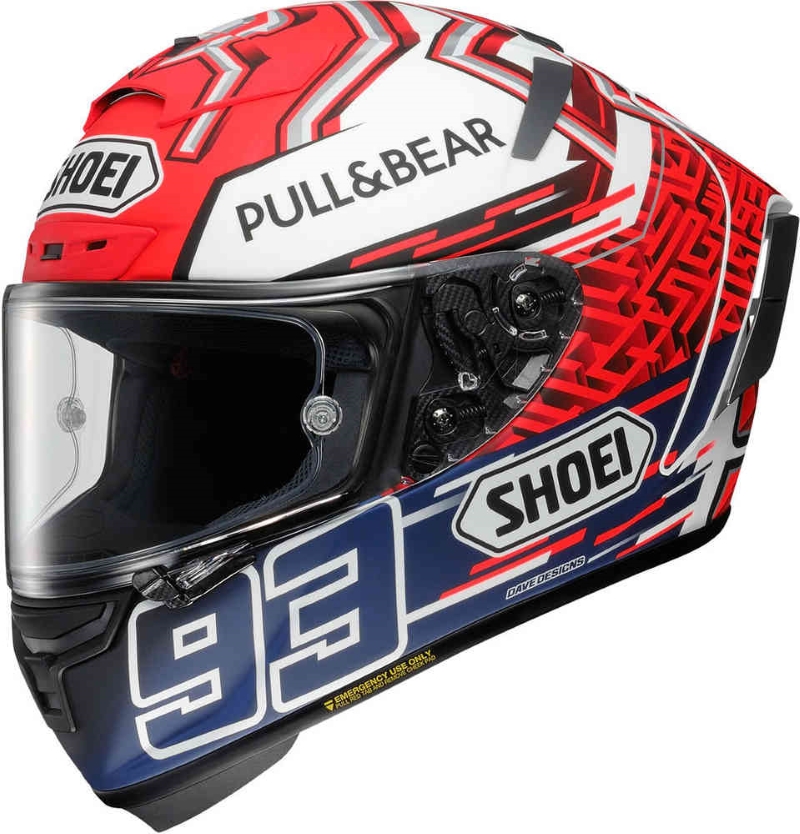
However, magical thinking is much broader than that – it applies to any situation where you believe that something happens as a direct result of another thing when there is no logical, causal link between the two events. Like believing that paying $700 for a motorcycle helmet will make you safer than buying a $50 helmet when this is not backed-up by the facts. Or buying a $900 helmet with the same paint scheme as Marc Marquez in the belief that this will make you a more interesting or worthy human being.
shoei1

Shoei X-Spirit III Marquez, RRP €869.00. And jolly nice it probably is too, but that’s more money than I hope to pay for a helmet and a motorcycle.

The sad truth is that world just doesn’t work that way. But the people who try to sell us things every single day have to try to make us believe that it does, otherwise we might not be willing to spend money on things we don’t need or to accept that stuff somehow defines who we are and what we are worth.

Trust me on this, if you buy a motorcycle helmet with a custom paint job, people will not say; “Goodness, look, that must be Marc Marquez, nipping down to the shops for beer and biscuits.” Nor will they assume that, because you wear an identical helmet, you must be as talented, successful and popular as he is. In fact, it’s unlikely that buying such a helmet would improve the way that the world regards you or make you any happier at all. But that is the type of magical thinking that people selling these helmets want us to accept.

In fact, this kind of thinking doesn’t just permeate the modern world, it’s absolutely intrinsic to the consumer society. The idea that things make you happy, and that the bigger and shinier the thing, the happier it’s going to make you is what makes the commercial world go round. There is even a lie at the heart of this deception. No matter how cool or satisfying the things you buy, they will soon be replaced by even more desirable things. They must be, because that’s how the commercial world works.

So, no matter how many things you buy or how much money you spend, there will always be more, better things coming along. You never actually become happy. If you did, then you might stop spending money and that’s no good. What’s needed is that you remain in a state of permanent yearning, always looking to the next thing which will surely bring happiness. Actually, they tend to do the precise opposite.

So, what you’re really being sold is an illusion. If you want to find real contentment, you don’t need the latest thing. In fact, you probably need to start thinking about things in a completely different way. And that, for me, is at least partly what minimalism is about.

It isn’t only or even principally about saving money, but it is about doing more with less. If I can buy a motorcycle helmet (or a motorcycle) for less money, that’s good – I am a freelance writer and if I need less money that means I can spend less time working to pay for stuff and more time doing what I enjoy. If I buy a used motorcycle helmet (or extend the life of an elderly motorcycle) that’s good because it not only saves me money, it also uses less of the world’s resources.

As I don’t have a bike yet, I don’t know if my €5 helmet will be any good. But when I do get a bike, my judgment on whether this is or is not a good item of motorcycle gear will be based on how it does its job, not what anyone else might think about how it looks.

Striving to achieve minimalism in motorcycling, as in anything else, means looking beyond the magic and focusing on what’s true and real and what you actually need as opposed to what other people tell you that you should need. That isn’t always easy, but we’re trying…

See also: Minimalism and Motorcycles

Minimalism in motorcycling

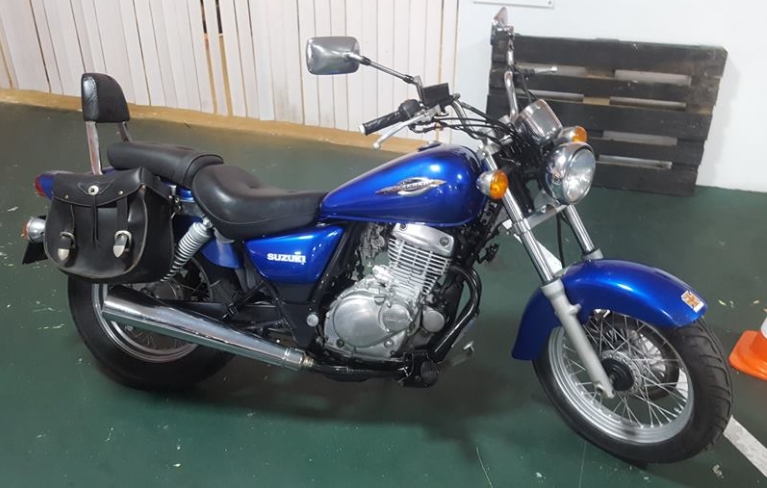
I went to see a motorcycle in Granada yesterday (a 2004 Suzuki Marauder 250cc, as you ask) and I was immediately reminded of how long it has been since I sat on a motorcycle and how good it felt! I really can’t wait to get back on the road again…

The Suzuki felt bigger and more solid than I had expected, and very comfortable for myself and Julie. It’s on sale for less than €1,000 and the price includes a set of panniers, a backrest and the transfer fee (here in Spain, if you buy a used vehicle of any kind, you have to have a legal agreement drawn up between the buyer and seller by a lawyer) so it’s certainly a possibility…

marauder1

This is the Suzuki I was looking at yesterday…

However, actually looking at a bike made me think about how we’re going to fit minimalism and motorcycling together? Like the Pirate Code, minimalism isn’t a set of rules, it’s more a philosophy for approaching your life. But how does that translate to two wheels? That’s what I want to talk about in the next couple of posts.

When I first got into motorcycling, a 750cc bike was pretty damn big and traveling at anything over 100mph felt like an adventure (especially on one of my Nortons). Over the years, I went through a number of very high performance motorcycles and I can still remember in those pre-speed camera days of the mid 1980s (sigh…) watching in amazement as the needle on the speedo of my Kawasaki GPz900R buried itself against the stop at somewhere north of 160mph.

But, I don’t want to do that anymore. Spending almost five years living in South East Asia and in some areas with awful poverty has made me think more about how I use the resources of the world. And anyway, as I get older I no longer want to travel everywhere at warp speed. I actually enjoy ambling along and enjoying the smell of the wild rosemary at the side of the road. I like to listen to the sound of the world as I ride rather than just hearing the tearing scream of wind on my helmet.

Which is why I want a smaller bike. And I want something simple, partly because that will help to use less fuel but also because I want to be able to maintain (and fix if necessary) the bike myself. And I want a used bike because that costs less and buying used is a kind of recycling. Keeping an older bike going and even refurbishing it may mean one less new bike on the road.

But I also want to go touring for which I want a bike that will be able to undertake even long journeys without my having to worry if it will make it. That effectively rules out anything very old or even vintage – I started my motorcycling life on British bikes of the 1960s and 1970s. I loved them, but even I couldn’t claim they were reliable. I once wrote an article for a bike magazine titled Choosing a British Motorcycle from the 1970s and it consisted of a single word: ‘Don’t!’ (though strangely, the editor seemed uninterested in publishing it…)

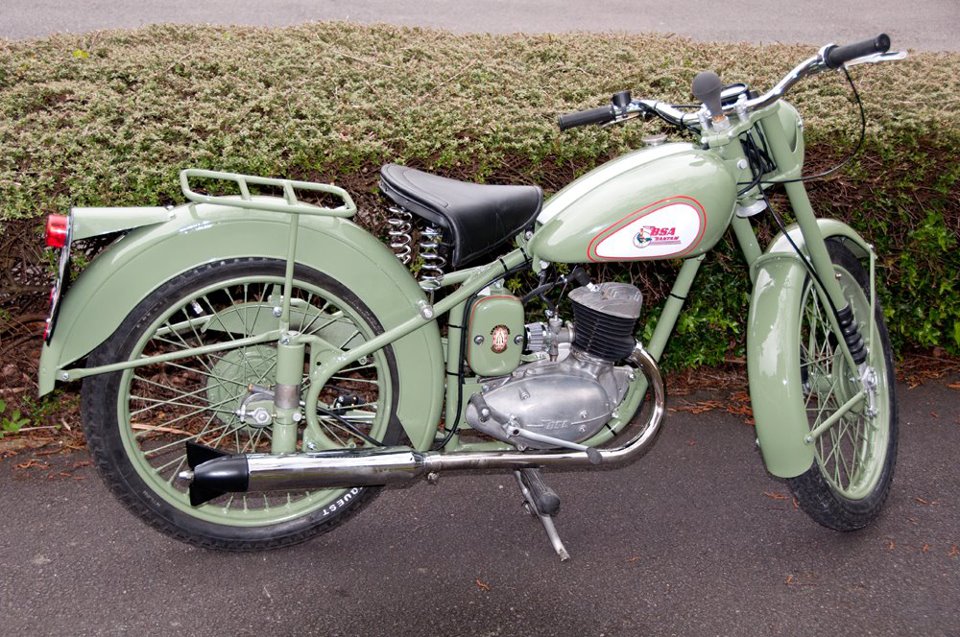
So, I won’t be looking at any BSA Bantams or lightweight Italian bikes because I don’t find anything amusing about oil leaks and comedy electrics. The bike I choose will almost certainly be Japanese because there are lots of them around, they’re cheap, they’re good at really basic things like keeping oil on the inside of the engine and if they do go wrong, part are easy to find.

BSA_BANTAM_D1

That’s a BSA Bantam. If you can rescue one of these and go touring on it, you have my complete respect. But that’s not what I want to do because I want to be able to focus on the trip, not the bike.

If possible, I want a 250cc bike, because that seems a reasonable compromise between the ability to carry two people and fuel consumption. I’ll probably go for some sort of cruiser style because that offers good comfort for two people. Does that really represent motorcycling minimalism? I suppose the most important answer to that is, it does to me. And that’s really what minimalism is about – deciding how to do more with less in your life.

That might simply mean going for a smaller capacity bike. Or a used bike instead of new. Or, if you have the ability you might choose to take an old nail that’s on its last legs and give it a new lease of life, meaning that all the time and resources which went into creating it will actually deliver more miles traveled. Minimalism means what you want it to mean, in motorcycling or any other part of your life.

See also: Magical Thinking and Motorcycles

Zen and the Art of Motorcycle Literature

‘The study of the art of motorcycle maintenance is really a miniature study of the art of rationality itself. Working on a motorcycle, working well, caring, is to become part of a process, to achieve an inner peace of mind. The motorcycle is primarily a mental phenomenon.’

I still haven’t found a bike yet, so I’m doing the next best thing: reading about motorcycling. There aren’t many books about biking that I have read more than once, but one of them is Zen and the Art of Motorcycle Maintenance, by Robert M. Pirsig.

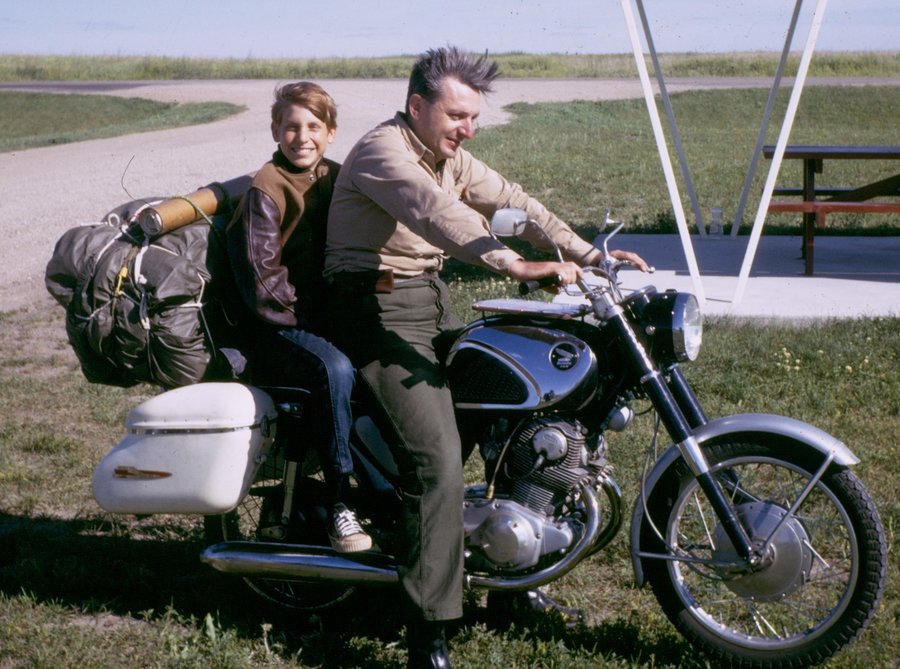
Back in 1968, Bob Pirsig and his eleven year old son Christopher went on a trip from Minneapolis to San Francisco on a 300cc Honda SuperHawk motorcycle. Pirsig decided to write about the trip, but this is the story of a motorcycle journey in the same way that Moby Dick is the story of a whale.

pirsig-with-chris-1968_custom-1dfd21fa4918cd9508463228a8dd69566ee06eb0-s900-c85

Pirsig and Christopher on the Honda SuperHawk.

This is a novel, but it’s also autobiographical – in the introduction Pirsig notes that: ‘What follows is based on actual occurrences. Although much has been changed for rhetorical purposes, it must be regarded in its essence as fact.’ Pirsig uses engagement with motorcycles, both the riding and fixing therof, as a way to examine the philosophical relationship of people to technology.

Except that it’s not that simple. It’s also about trying to reconcile two very different philosophical views of the world: the Romantic, which is concerned with appearance and form and the Classical, which sees things in terms of underlying function.

‘One solution to boredom on certain kinds of jobs such as greasing and oil changing and tuning is to turn them into a kind of ritual. There’s an esthetic to doing things that are unfamiliar and another esthetic to doing things that are familiar.’

Pirsig uses the different approaches to motorcycling of himself and his friend John to illustrate these philosophical views of the world. That’s fascinating, but it can also be hard work. Take this for example:

‘The way to solve the conflict between human values and technological needs is not to run away from technology. That’s impossible. The way to resolve the conflict is to break down the barrier of dualistic thought that prevent a real understanding of what technology is – not an exploitation of nature, but a fusion of nature and the human spirit into a new kind of creation that transcends both.’

The book is also about Pirsig’s search for the ghost of Phaedrus, a character used by Plato in a philosophical debate who may or may not also represent Pirsig in a previous phase of his life before some form of mental breakdown.

I love reading and I love riding motorcycles. Sometimes, rarely, I can combine both (not at precisely the same time, obviously!). On one trip to Europe on an elderly bike I took a copy of Zen and the Art with me. Every hour or so I’d stop at the side of the road and read some of this book. Then I would bumble along for another hour, thinking about what I’d read. Then I’d stop again…

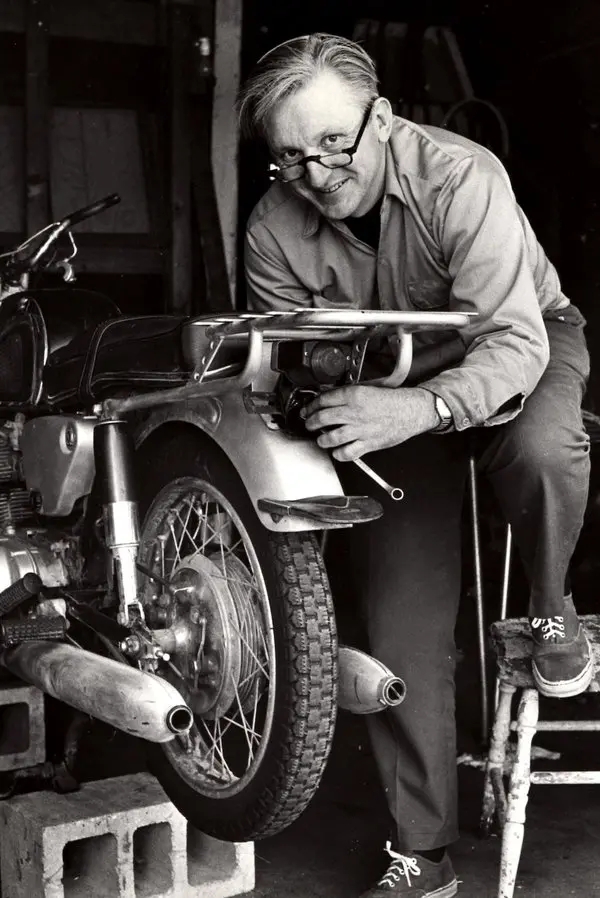
PIRSIG1-articleLarge-v2

Bob Pirsig really was a keen home motorcycle mechanic.

Even though I have read it four or five times, I’m still not sure I really understand this book. Perhaps that’s why I keep coming back to it? I find the first seventy or eighty pages, where Pirsig uses his trip and stories about motorcycles to illustrate relatively simple philosophical principles, fairly clear. But when the book later moves into abstract philosophy, I struggle to keep up.

But sometimes Pirsig will say something so simple but so wonderful that it makes the hairs on the back of my neck stand on end. For me, the quote with which I started this blog (here) is still the most succinct and true explanation I have ever seen of why riding a motorcycle is different to driving a car and much of what Pirsig has to say can be seen as underpinning modern movements like mindfulness and minimalism.

bikebook

Somewhere deep in the heart of Europe – bike, book, sunshine, open road. I’m not sure it gets any better than this.

If you haven’t read it, I highly recommend Zen and the Art. It doesn’t take long to understand why more than one hundred and twenty publishers initially turned it down. Or to see why it has never been out of print since it first appeared in 1974.

There is great literature. There are great books about motorcycling. It’s rare to find both in one volume.

What is this minimalism thing anyway?

Minimalism is a movement which began, as so many of these things do, in the US. The short version is, it’s about getting rid of stuff. The stuff that we seem to relentlessly and almost unconsciously accumulate as we go through life.

It’s easy for it to seem that having stuff is essential, especially having the latest, coolest stuff.

The sad truth is that most of us have far more possessions that we will ever really use, and we often discard things that are perfectly good because of a perception that having a newer thing will somehow make our lives better.

Julie and I got a head-start on the whole idea of discarding things about six years ago when we decided to sell our home in Scotland and go travelling. We sold or dumped every possession other than those we could fit into two suitcases. And do you know what? It felt good. Really good. Once we had got rid of all the things that had seemed so important, it was finally possible to focus on what really mattered.

Bagan temples2

That’s Bagan, in Myanmar. Amazing place. We were lucky enough to visit a couple of years ago on an electric scooter.

After periods living and working Vietnam, Thailand and Myanmar we’re now (sort of) settled in Spain. And we still don’t have many things. When I started to think about getting back into motorcycling after a five-year hiatus, we agreed to try and extend the same philosophy into biking.

I don’t think you need the latest motorcycle to enjoy touring. I don’t think that you need tyre-shredding performance to enjoy travel. I think all of us can probably do more with less. And that’s what this site is really about. Motorcycle travel that’s as simple and basic as it can be and costs as little as possible, because debt isn’t fun either.

You’ll notice that these are things that I think… I don’t know for certain because I haven’t tried yet. Perhaps this time next year I’ll be looking for a full-dress tour bike with a radio and satnav and perhaps Julie and I will be dressed in matching designer motorcycle gear. Perhaps, but I suspect not.

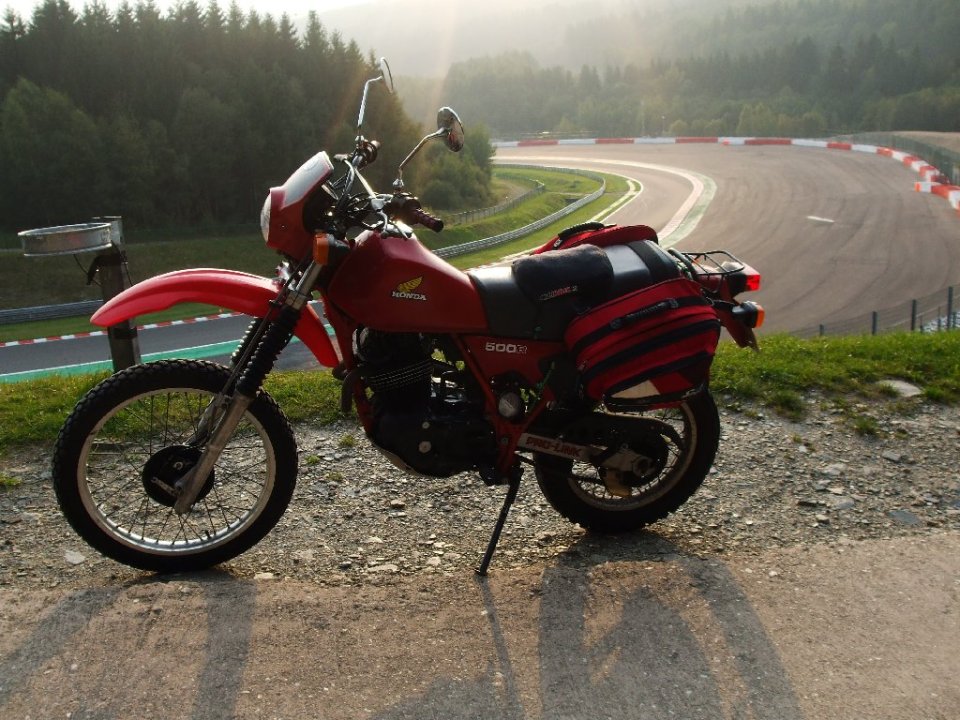
DSCF0277jpg

Touring, minamilist style – a few years back, I bought this Honda XL500R for less than five hundred pounds, re-furbished it and took it on a mammoth trip round Europe. This pic was taken during during a late evening visit to the race track at Spa in Belgium.

Because just like life, motorcycle touring is a journey best done with as little luggage as possible. When you stop thinking about all that stuff, you can actually take the time to enjoy what you’re doing.

If you want to find out more about minimalism, you might want to take a look at this website: https://www.theminimalists.com/minimalism/

The Journey Begins

Thanks for joining us!

In a car you’re always in a com­part­ment, and be­cause you’re used to it you don’t realize that through that car win­dow ev­ery­thing you see is just more TV. You’re a passive ob­serv­er and it is all mov­ing by you bor­ing­ly in a frame. On a cy­cle the frame is gone. You’re com­plete­ly in contact with it all. You’re in the scene, not just watch­ing it any­more, and the sense of pres­ence is over­whelm­ing.’

Robert M. Pirsig, Zen and the Art of Motorcycle Maintenance

I love touring on two wheels. I have ridden in most European countries as well as my home in the UK and I have even managed a little riding in South East Asia.

To me, a motorcycle is the perfect way not just to see other parts of the world but to experience them. You can smell the tang of the forests and feel the chill as you climb high mountain passes. Of course, you can experience these things when walking or cycling too, but a motorcycle allows you to travel through large changes of landscape in a relatively short time, and it’s probably that aspect which I enjoy most of all.

I can still remember the first time I saw the Alps in the distance, like a bank of dark clouds on the horizon. Two hours later, I was there, in the midst of twisting roads over precipitous drops and spirit-lifting vistas. That experience provided a feeling of fulfillment, of being there in that particular moment that is sadly lacking from much of everyday life.

But here’s the thing: I’m getting older. Soon I’ll be sixty. This doesn’t just mean stiff limbs and new aches and pains, for me it has also brought a different view of the world. I still like to travel but speed and power just don’t interest me like they used to. The idea of having the latest, biggest, most hi-tech bike not only doesn’t excite me any more, I actually find it a little dull.

Which is what this site is about. I want to explore the possibilities of touring on a small capacity motorcycle while consuming as little of the world’s resources as possible. I plan to find an elderly bike that won’t cost much to buy and which will probably need a little care and attention to prepare it. Then, I want to see if I can use it to explore parts of the world which I haven’t seen.

I’m lucky in that I won’t be doing this alone. My wife and I have been together for almost thirty years and we both still enjoy the challenge of travel. She’ll be coming with me and giving the view from the back seat.

Together, we’re the Motorcycle Minimalists and I hope you’ll come with us on some big journeys on a small bike.

h1